Showing posts with label Architecture. Show all posts

Sunday, February 18, 2018

Armadale, Melbourne – Victoria


When you stand in High Street, Armadale – constantly written about as the epitome of contemporary style and one of Melbourne’s premier blue chip areas – it’s hard to imagine it when it was first settled in the 1850s. Back then, it comprised market gardens and nurseries with a few housing allotments against a bush backdrop.


History notes that it wasn’t until the 1880s, that the boom years came with the first trains into the area. Then, the land was sub-divided for commercial and residential development and by 1890, High Street was populated by bootmakers, tailors, dressmakers, milliners, wheelwrights, blacksmiths, green grocers, upholsterers, iron mongers and the like – a far cry from today’s stylish fashion boutiques and the plethora of Persian rug shops, antique stores, nail and hair boutiques and bridal parlours that line the main Armadale thoroughfare; and the millions of dollars’ worth of high-end cars that park there.


I stayed in Armadale in December 2017-January 2018. I drove into the cool, leafy, tree-lined residential streets, parked my car outside the villa where I was staying and spent the next three weeks walking and photographing. I fell in love with so much of the residential architecture – the huge old homes that lined the streets – usually tucked away behind trees and high brick walls and impenetrable gates – but just enough visible to pique my interest and set me wondering about some other grand lifestyle.


I slipped over into neighbouring Toorak – long recognised as Melbourne’s top suburb – and into adjoining Malvern, Hawthorne and Prahran; all of them known for their expensive real estate. And in every street, I found a house that, externally at least, set me to dreaming and to wondering what it might be like inside.


I’ve always loved big houses and it was only a matter of time before I found a way to explore further – albeit via a computer. Turns out it’s relatively easy to get a glimpse inside many of these enormous, multi-million dollar homes – you just look the address up on the Internet and if they’ve been sold within the last decade, there’s usually a record of transactions, often with real estate photographs supplied. Much less satisfying than an actual house tour but enough to give you a hint of the interior of a $14-million home you wouldn’t otherwise see inside. And yes, I did feel like a nosy pauper – but only for a very short time.


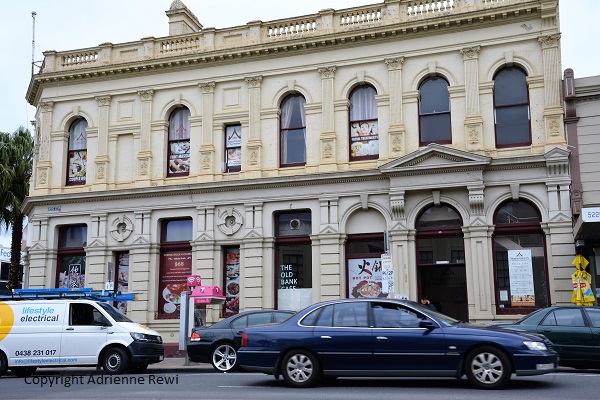
Contrary to (my) expectations, Armadale is also a suburb of apartment blocks – new and old. Its proximity to central city has always made it a popular place to live and I liked the way apartment blocks of all ages sat comfortable and appropriately, side-by-side with top-dollar houses – integrated, appealing.


 Armadale is sited 7 kilometres southeast of Melbourne’s central business district on what was once part of Wurundjeri land. The 2016 census indicated a population of around 9,000 residents; and it was named after Armadale Sutherland, in Scotland, where the 15th Premier of Victoria, James Munro was born.

It’s a pleasant place to be – from a residential point of view; but the neighbour’s don’t seem that neighbourly nor trusting, tucked away as they are behind their impenetrable high walls and gates with security cameras and microphones to see ‘who’s knocking.’ I guess it’s one way to keep unsolicited ‘doorknockers’ away from your actual door. 
And I certainly did feel  SECURE.


But there’s also something about the pristine, rigidly maintained streets and sections that left me cold. For all the fabulous old architecture, for all the high fashion, expensive, designers, bridal boutiques, antiques (expensive) and posh restaurants, I found these wealthy suburbs lacking in character -  no graffiti to speak of, no rough edges, very few book shops, no grunge, no mess....it's all a bit sanitised for me and my photographic eye. I prefer places that are bit more rough around the edges. Places more ordinary.
Places that encourage people to lives with gusto and colour.

Thursday, November 30, 2017

Geelong – Victoria


I’d wanted to visit Geelong for a long time – at least five years in fact – but on every visit to Melbourne, there was always some reason for delaying the trip.
But now, six months in to living in Central Victoria, I have finally made it. I drove there about two weeks ago, despite the fact that I hadn’t heard a lot of praise for the place. Most comments were along the lines of “I’ve never found anything there to recommend it,” or, “It’s solid working class and filled with football freaks,” said someone else.
But when another person told me it was “still pleasantly grungy – not yet fashionable or pretentious,” I decided a trip was definitely warranted.


And having met a young solo mother with two kids, holding down three jobs and studying at Geelong’s Deakin University, and thereby making the 1.5-hour drive twice a week for lectures, I decided I‘d need a better excuse for NOT going than, ‘I never find the time.’

Plus I had a mission. I wanted to catch the last days of “Fred Williams in the You Yangs,” an exhibition at Geelong Art Gallery. Several people have asked if my painting has been influenced by Fred Williams, but as I’d never heard of him (I’m ashamed to say), until three months ago, I decided I’d better find out what he was all about.
[As an aside, No, my work hasn’t been influenced by him and any very tiny similarity in SOME of my paintings, is purely coincidental].


For anyone else who has never heard of Fred Williams (1927-1982), he was an unassuming-looking man – a major Australian artist - who is said to have changed the way the Australian landscape could be painted and seen “in resolutely abstract terms, yet powerfully recognizable by viewers as quintessentially of Australia.”

His work in the You Yangs (a fascinating granite-covered landscape about 20km north of Geelong), began in 1962 and continued through to the late 1970s, encompassing everything from sketches and notes to drawings, prints, gouaches and large scale oil paintings.
I loved them all. I sat in front of them in a quiet gallery for a long time, taking in the meditative quality of his abstract hieroglyphics – like exquisite little bird scratchings in oil paint; and so very evocative of the Australian landscape.  It was peaceful after the hustle and bustle of the Archibald Prize Gallery next door, where every man and his dog had arrived to look at the finalists and winners. They were literally pouring in by the bus load.


The Archibald Prize is awarded annually to the best portrait, 'preferentially of some man or woman distinguished in art, letters, science or politics, painted by any artist resident in Australasia’.
The Archibald Prize was first awarded in 1921. In establishing the prize, J.F Archibald’s aim was to foster portraiture as well as support artists and perpetuate the memory of great Australians. Over the years some of Australia’s most prominent artists have entered and the subjects have been equally celebrated in their fields.
I was particularly taken by the Nicholas Harding portrait of Australian artist, John Olsen, Anh Do’s portrait of Aboriginal actor, Jack Charles, and by Andrew Lloyd Greensmith’s work, “The Inner Stillness of (102-year-old) Eileen Kramer (above).


Beyond the art gallery, I spent some time driving the streets of inner Geelong getting a feel for the place. Geelong is a port city, located in Coria Bay, 75km south-west of Melbourne. It is Victoria’s second largest city, with a population of around 192,393.
In October this year, it became one of the 180 world-wide cities to be part of UNESCO’s Creative Cities Network. The designation recognises the design history of Geelong and surrounds, from the region’s Aboriginal heritage to its history in textiles and wool production; automotive design and manufacturing to designs that have revolutionised surf culture. It also celebrates innovations currently being made across the region in advanced manufacturing and virtual reality.
You need time to discover a lot of that I suspect, as it’s not immediately evident on a quick one hour drive. The shops were mostly ordinary at first glance, in buildings old and new; there seemed to be a proliferation of Asian restaurants, numerous tattoo parlours, pubs and Pokies places.


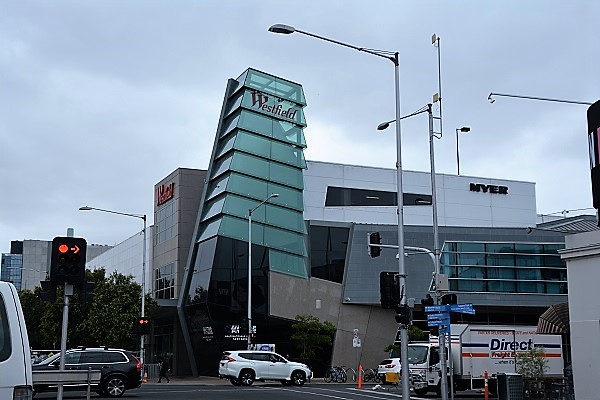
That said, I quickly discovered some beautiful old houses and inner city buildings. The new Geelong Library and Heritage Centre (beside the Art Gallery) (above), is striking for its geodesic dome. It was designed by ARM Architecture of Melbourne and opened in November 2015.
By comparison, the huge Geelong Government Building across the road surprises with its overt Brutalist architecture (also above).


And then there is the wonderful palm-lined esplanade, alive with walkers and cyclists –definitely a jewel in the city’s crown I’d say. With its multitude of cafes and restaurants, landscaped gardens, public art, kids’ play and swimming areas, enclosed sea baths, the restored historic carousel, it’s a major attraction for locals and visitors alike.


And then there are the quirky bollards – over 100 of them that are located in around 48 different spots along the promenade. They’re the work of local artist Jan Mitchen, who was commissioned by the City of Greater Geelong to transform old timbers and piles from a city pier that was demolished in the 1980s, into works of art. It must have been a mammoth undertaking but one well worth it. They give the whole area a great sense of fun and colour.

It was a fleeting visit but it did confirm one thing for me –another trip south, probably an overnighter – is definitely on the cards in early 2018. 


Tuesday, September 12, 2017

Malmsbury, Victoria


It always feels a little unfortunate to me that, one of the first things you see as you drive off the Calder Freeway and into the little hamlet of Malmsbury (pop.831), is the Malmsbury Youth Justice Centre – all high fences and that stark, unmistakable ‘prison’ architecture that’s inclined to put you off a place.

It’s a custodial centre for young males (18-21), deemed “too vulnerable” to serve time in adult prison. It’s set away from the village itself on what used to be the old racecourse site but it’s still there – as everyone became painfully aware in January 2017, when, during a riot around 15 ‘inmates’ escaped. Some were arrested and others fled the area in stolen cars – although they were later recaptured.

As a visitor to the town, it’s momentarily off-putting but for the purposes of a short visit, it’s easy enough to ‘close your eyes’ and pretend it’s not there.


Instead, I started my exploration at the Malmsbury Cemetery. I always like a good country cemetery. They’re usually quiet and peaceful and you can learn a lot about a place and its people by reading the headstones. I followed the signs for a kilometre or two out of town and pulled into a pleasing tree-lined driveway.

As I pulled up to the main cemetery gate though, I couldn’t see beyond the sign

“CAUTION: Please Beware of Snakes.”

I’ve made no secret of abhorrence of snakes and my fears of coming face-to-face with one but when I express this, almost every Australian I’ve met scoffs at me, saying trite things like “oh they’re more afraid of you…,” “they’ll hide when they hear you coming,” or “you’ll be lucky to ever see one.” I’m never consoled by this.

So I figure, when Australians actually go to the trouble of making a sign warning visitors about snakes, they have to be big and plentiful. I take heed. I note the warning. I do not get out of my car. I immediately drive back to the village for strong coffee. I’m perfectly happy to be called a wimp!


    I headed for the Old Post Café - on my last visit to Malmsbury it had provided me with everything I needed after the 11 kilometres or so I’d driven from nearby Kyneton. But it wasn’t to be. The Old Post Office Café is no more. The sign is still there but now it’s a second hand store of some sort; and at 11.30am on a Thursday, it was closed to all visitors. 

I didn’t mind. I photographed their front window display instead – a quirky mix of a giant, toothy head skeleton, robots, big-eyed dolls and a mini replica of Her Majesty the Queen. I wasn’t buying but I this was another to pique my interest as to what they might have inside.


A couple of doors away, is the old Mechanics Institute building. Every town in Victoria seems to have one and I was going to read up and see what they were all about; but I see some obliging person has already done it and raised a sign for ignorant people just like me. I hope you can read it!

I did discover however, that the world’s first Mechanics Institute opened in Edinburgh, Scotland in 1821; and in Australia, the first was opened in 1827, in Hobart, Tasmania. It’s a concept that caught on fast in Australia and during the 1850s, they spread throughout Victoria wherever a school, hall or library was required. Over 1,200 were built in Victoria alone and the buildings of 500 of those still remain – and over 50 of them have plaques just like this one. The Malmsbuy Mechanics Institute is now used for bingo, yoga, art classes and local meetings and events.


A few doors away, the Malmsbury Motel Hotel TAB and drive-through bottle store deserves a note, if only for its ability to be all things to all people – although a slightly terse note in the window “Public Toilets are Located in the  Botanic Gardens” suggests a publican tired of redirecting non-drinking/eating patrons away from the premises.

If you’re interested, you can dine on 300gram Scotch fillet steak here for $32, or grilled barramundi with lemon and dill aioli for $25.


The General Store seemed classically ‘general,’ as they continue the purveyors-of-all-things traditions “established in 1855; and the Small Holdings Café across the road was locked up and “Closed until Spring.”

Following the crowd – if half a dozen random visitors in the street can be called that – I found myself in the Malmsbury Bakery. Sometimes the need for caffeine overrides any interior preferences; although I did find solace in the fat loaves of freshly-baked bread lining the rear shelves.

There’s also something charming and unassuming about a place that hangs up a giant sign proclaiming: “Malmsbury’s magnificent meaty moreish meaty meat pie morsels.”
I didn’t avail myself of a meat pie but a small group of American visitors appeared to be loading up on fat sausage rolls and more than one of those aforementioned “meaty morsels.”


It’s easy to feel much better about a place when you’ve downed two good cups of coffee and a fat slice of excellent chocolate brownie (that you didn’t need), and so it was, as I took to streets to take in the local housing stock – and the famous bluestone viaduct.
It’s a handsome structure, built from local bluestone in 1859-60. It’s 149m long and has five arches (each of which has a span of 18m and rises 22m above the Coliban River). Nearly 9,000m3 of solid stone was used in its construction and it cost 72,000 pounds to build. On its completion, it was the largest masonry bridge built in Australia.


The Botanic Gardens are nearby and beyond that the main street takes you out towards Daylesford and Taradale. At this point, it’s easy to think you’ve seen the town but over the Coliban River and up the hill, there’s an interesting cluster of old buildings, the Malmsbury Railway Station (bluestone of course), a pretty vineyard and another whole residential neighbourhood.

It’s up here that you find The Mansions, a closed-up monster of a building in a state of neglect. Now privately owned, it is made up of two parts – what was once the early, wooden Junction Hotel; and a stone hotel and shops that replaced what was thought to be an original butcher’s shop. The hotel side of things closed in 1914 and it later became accommodation and headquarters for a religious group – as evidenced in the sign plastered across its side: ”Jesus said ‘Come unto me and I will give you rest.’

Across the road was another sign: “Horse Poo $2.

The irony was not lost on me.
Related Posts Plugin for WordPress, Blogger...